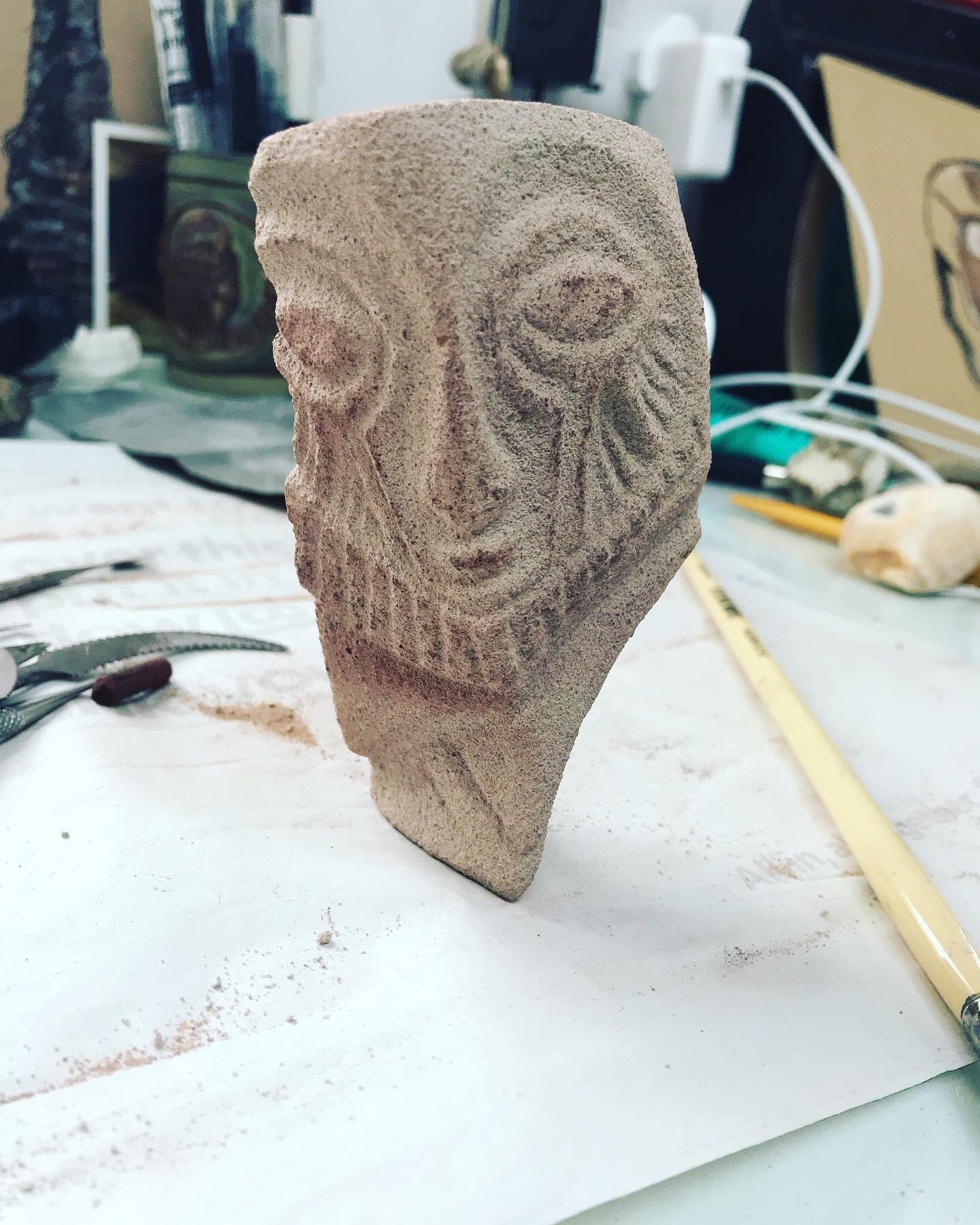
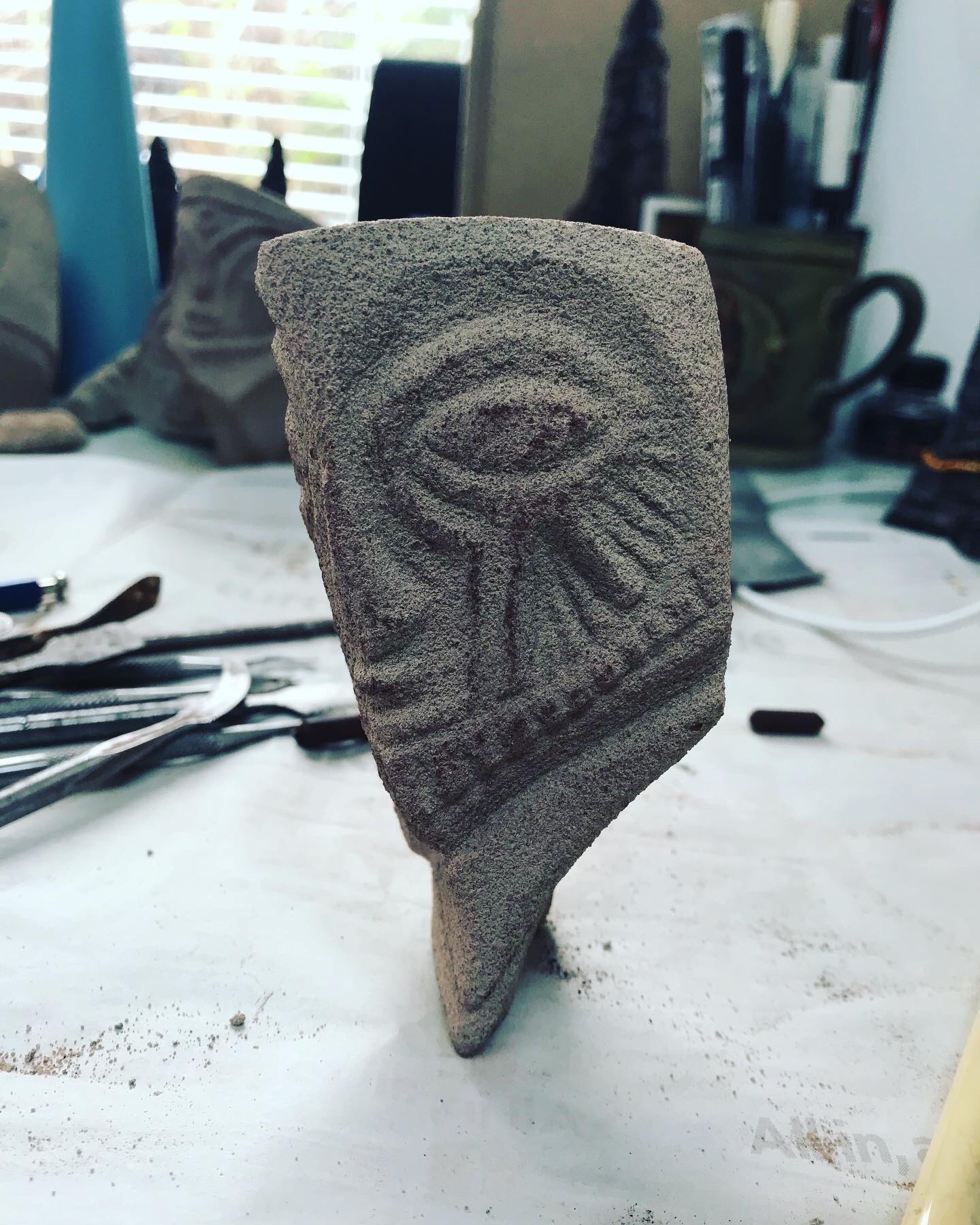
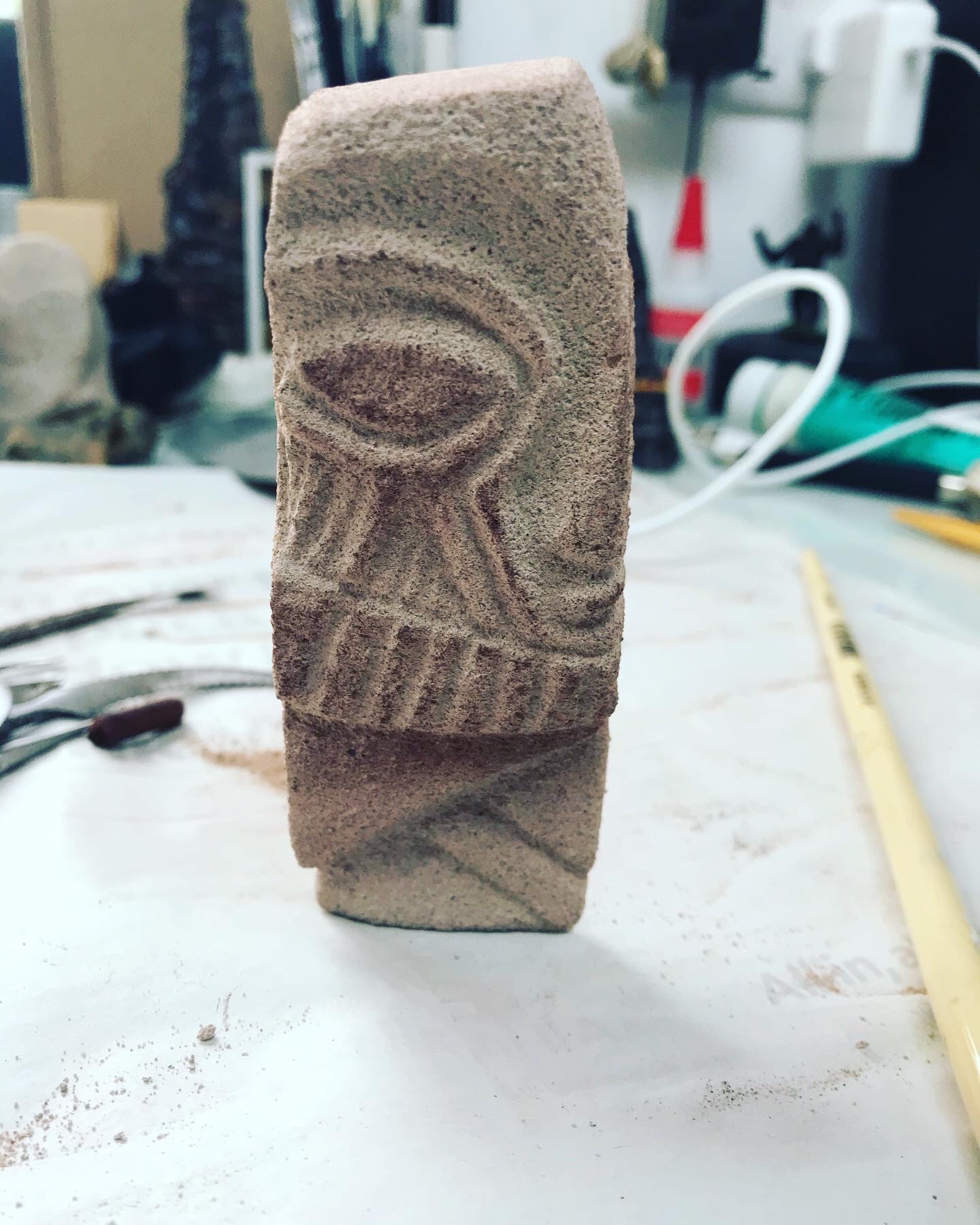
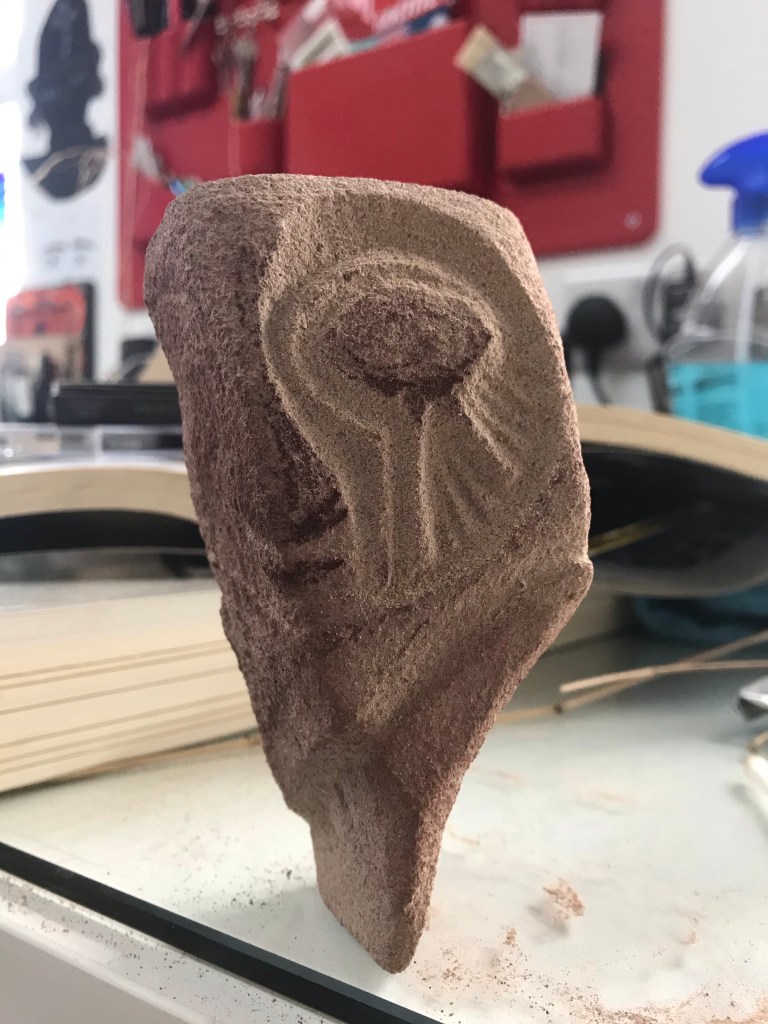
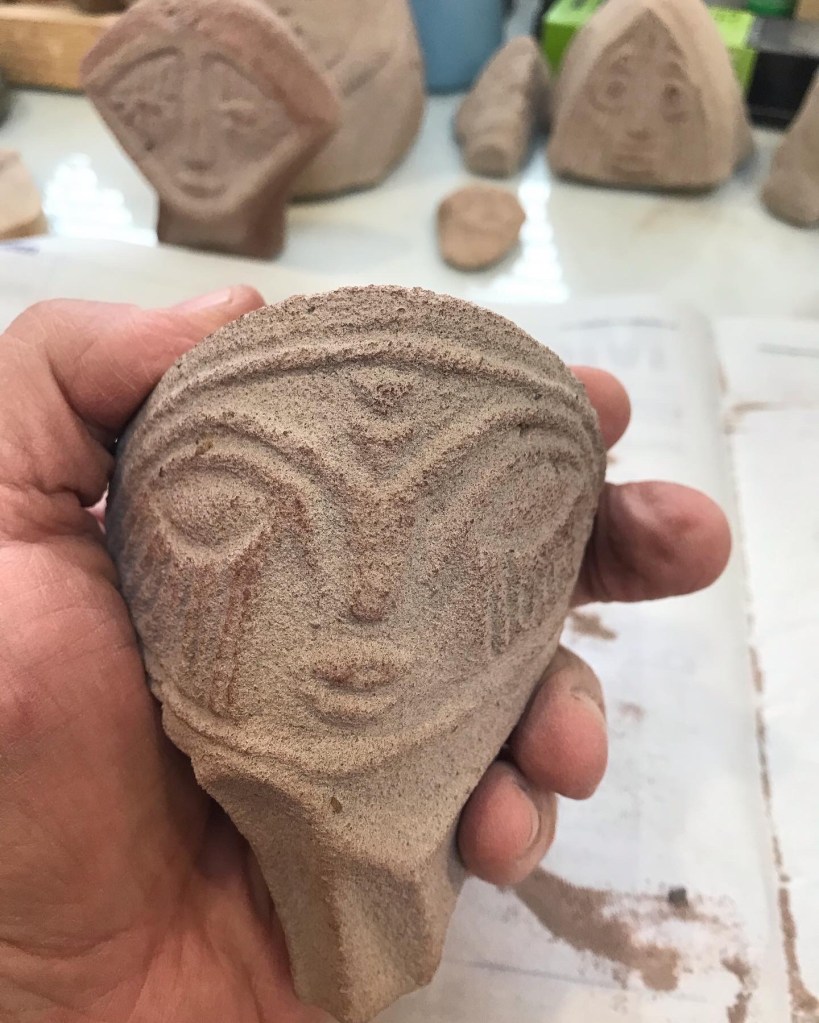
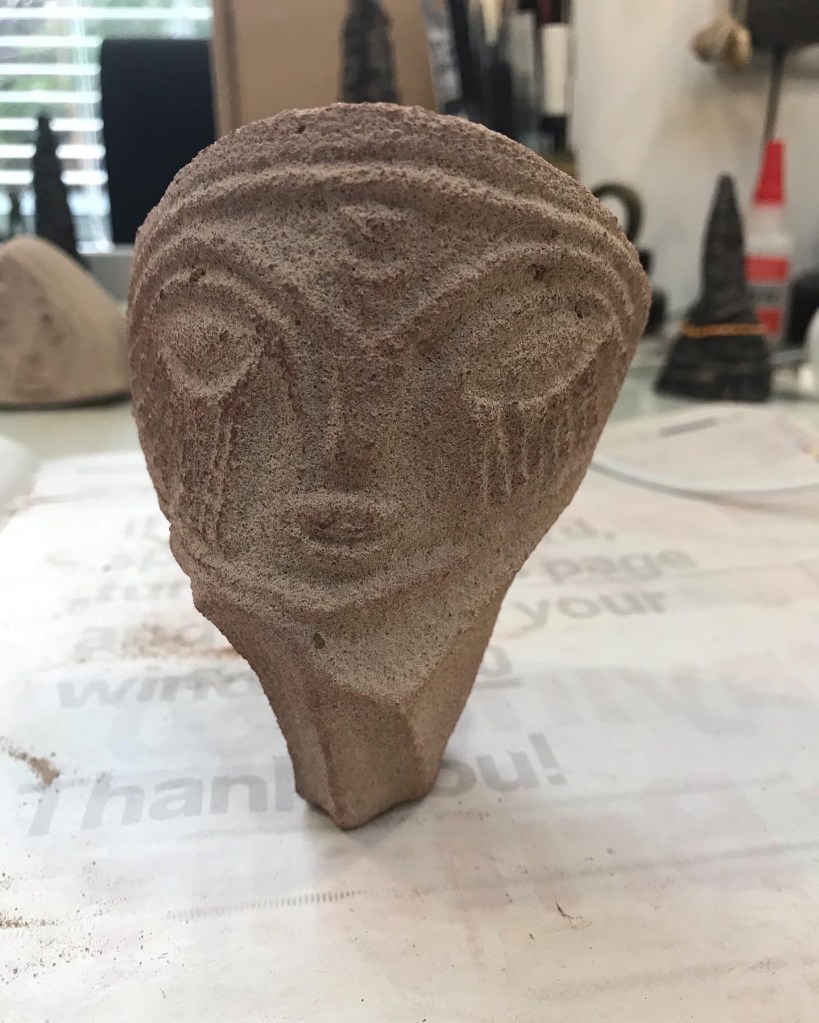
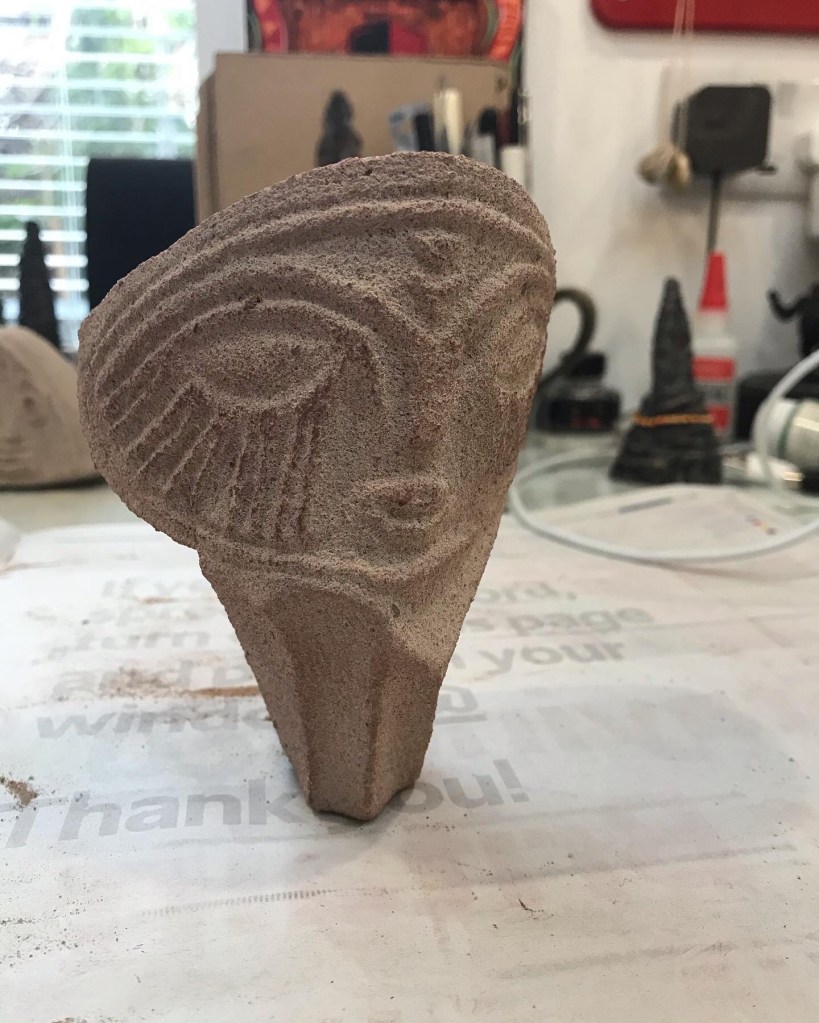
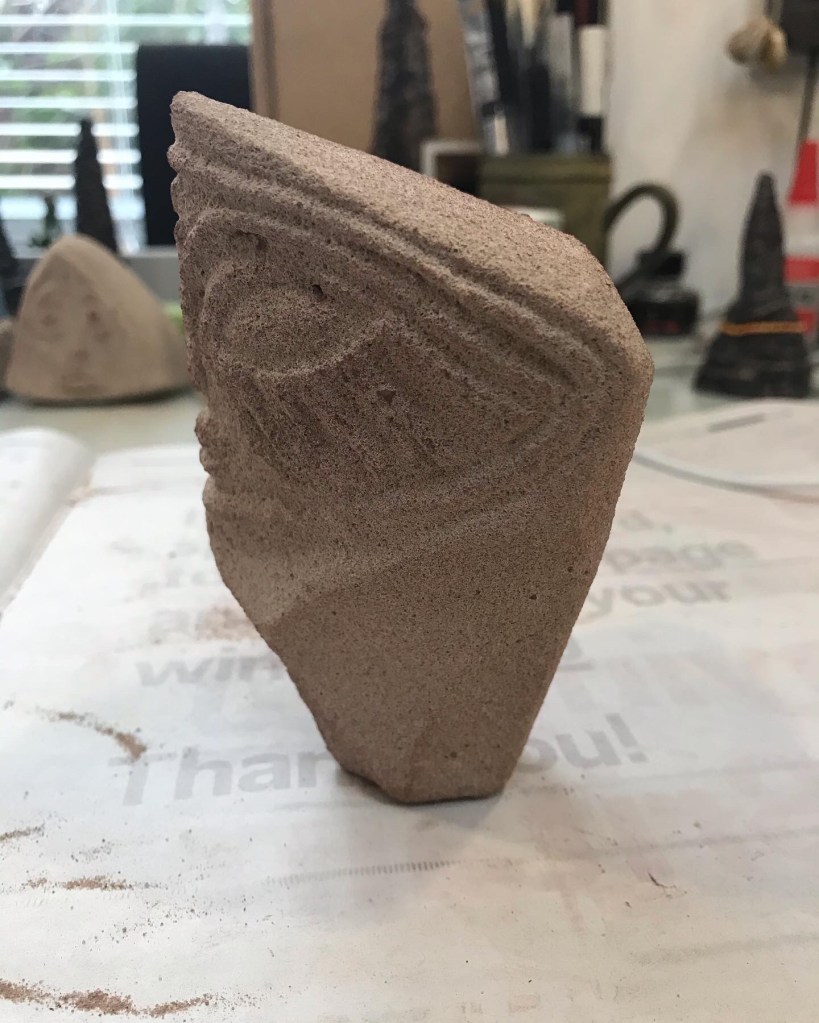
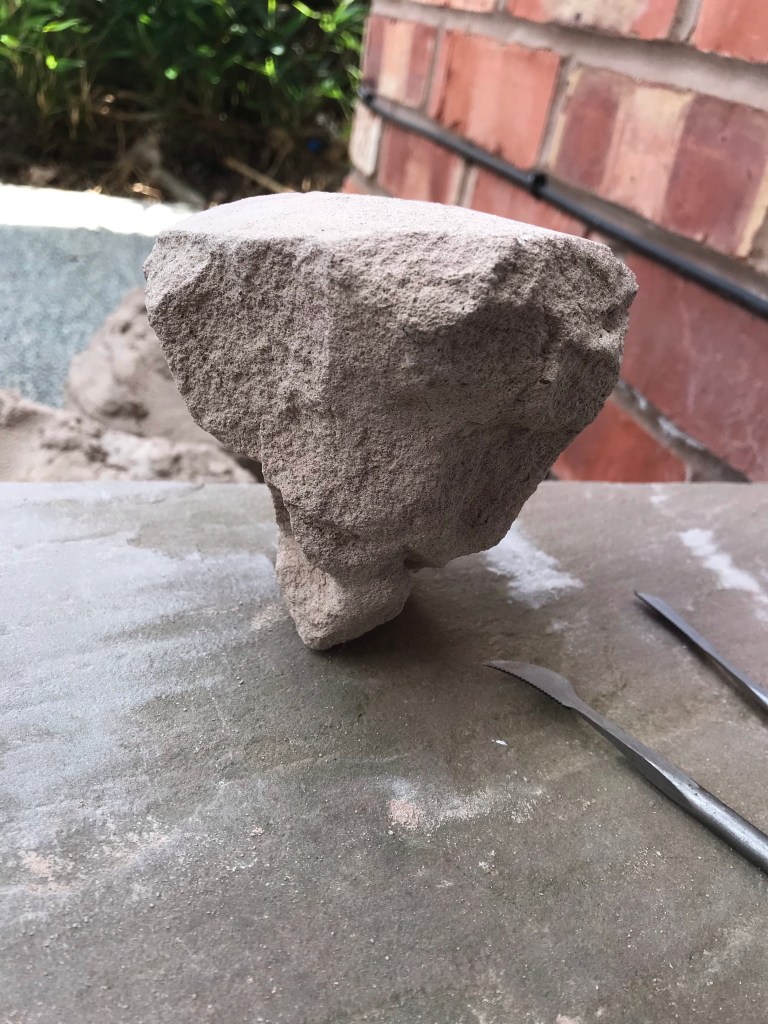
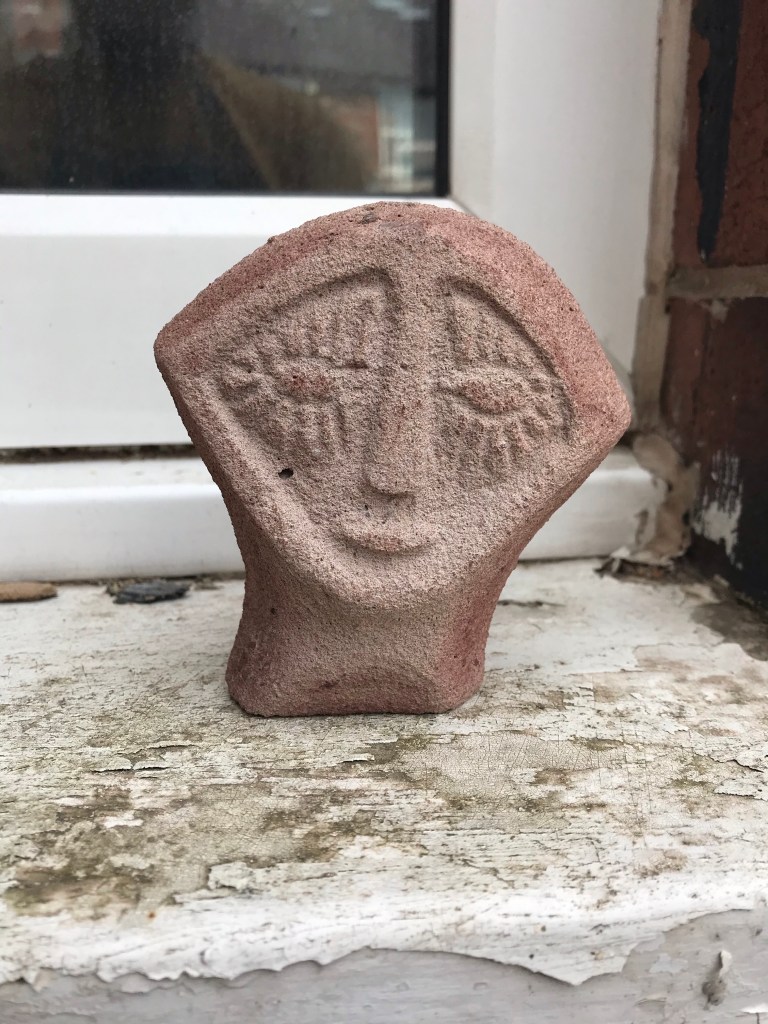
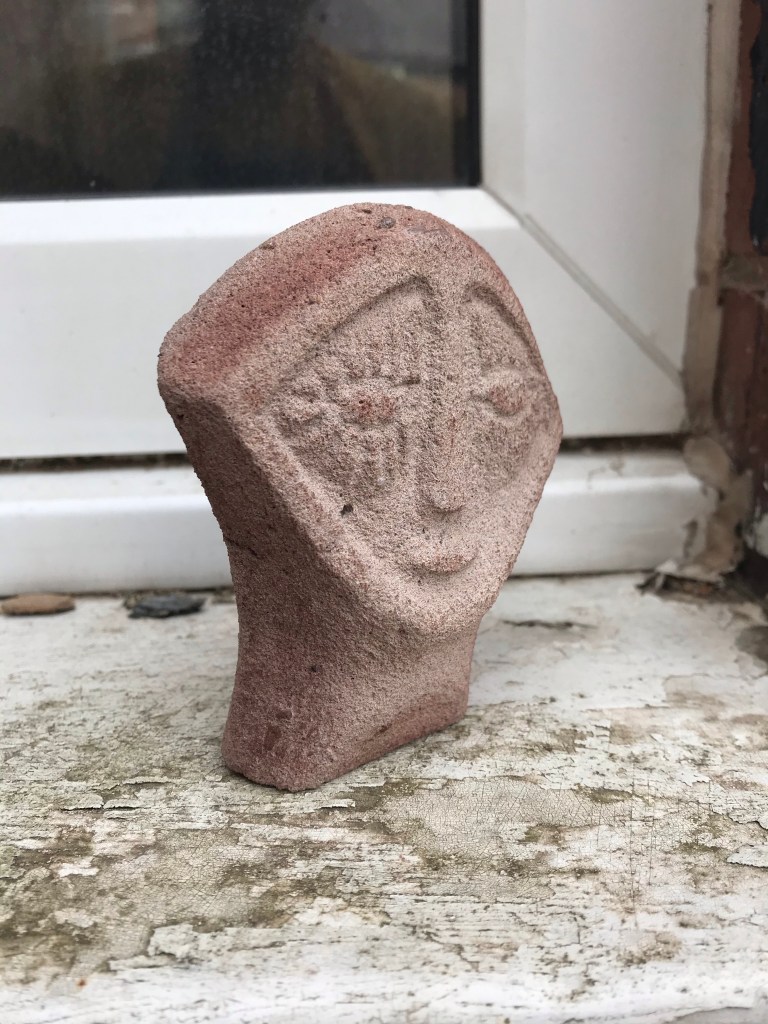
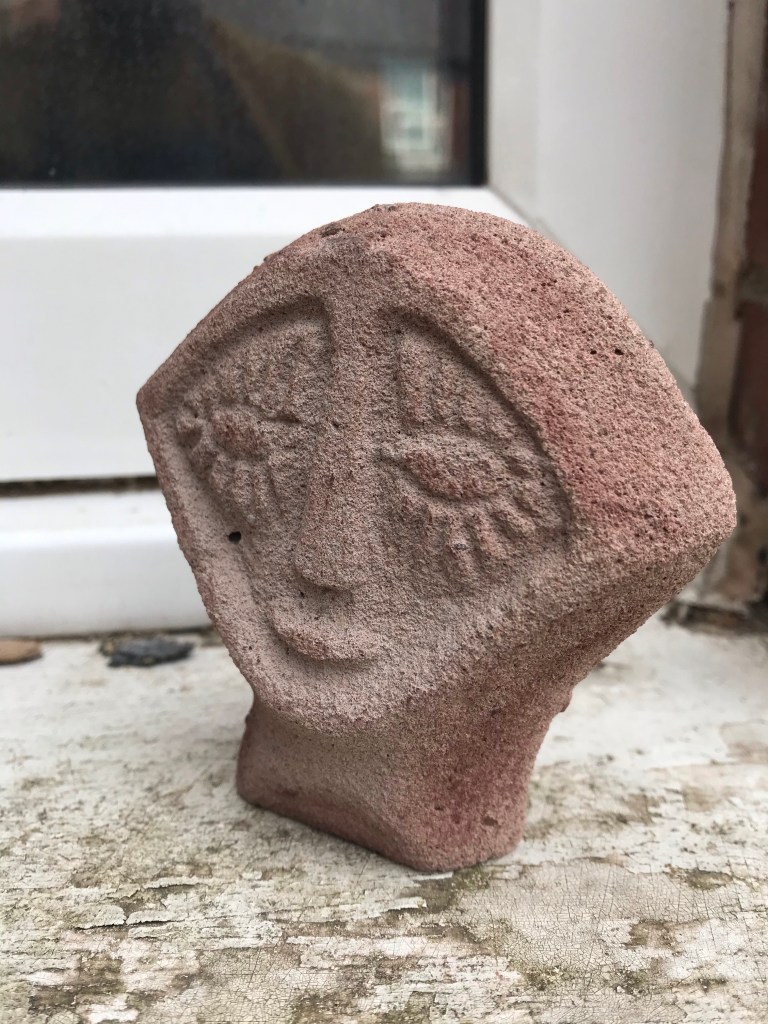
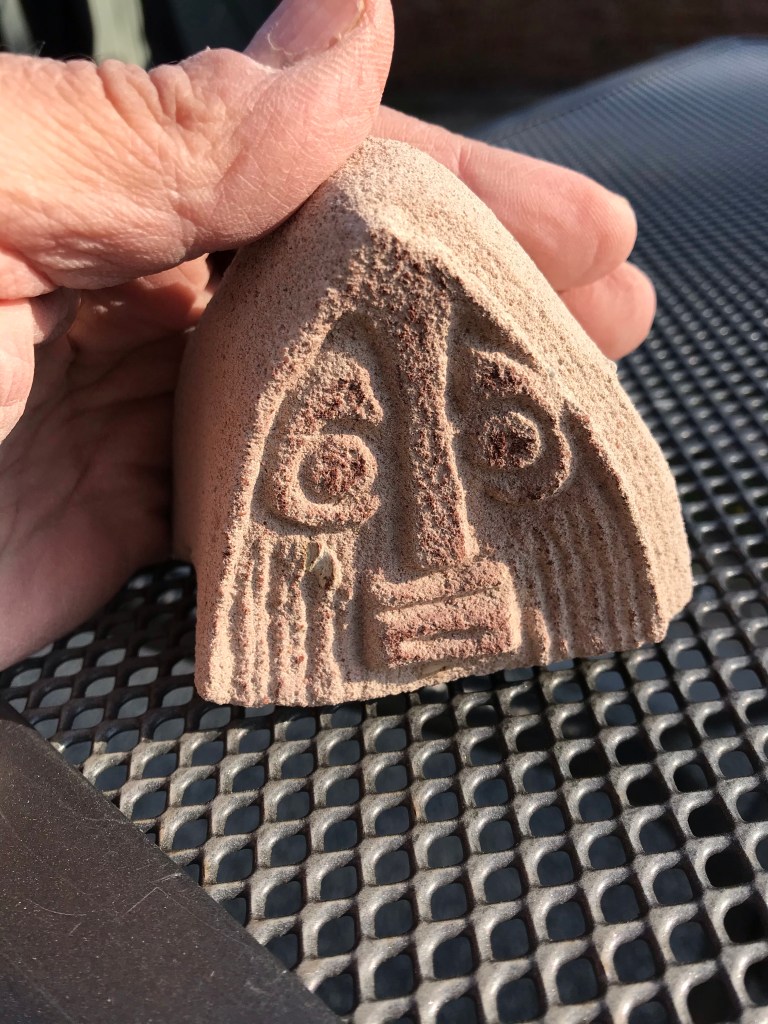
I have just finish sculpting this friend. It’s taken a few day but yesterday it started to come together properly. The intimacy of carving these is interesting, they all fit in my hand and I feel my way round them adjusting and manipulating the mortar with my tools. . . . . art #artist #artistsoninstagram #sculpture #sculpting #contemporaryart #contemporarysculpture #stonecarving #stonework #mortar #mortarcarving #tribal #folkart #isolation #isolationcreation
Currently working away on this . When I start I feel like I’m a blind man fumbling around trying to find the shape or spark within. The marks go one way and then another and then like a flash the form reveals itself to me and gradually it starts to take shape. At times like this I’m able to reflect on how lucky I really am, whilst the world around us is falling apart and taking on a new shape, I am able to sit in my studio listening to Max Richter and enter the mindful meditative state of my art practice. . . . . . art #artist #artistsoninstagram #contemporarysculpture #contemporaryart #contemporaryartist #stonecarving #mortar #tribal #folkart #maxrichter #isolation #isolationcreation #wipart #wipartwork
Finally finished working on this piece, she has taken a few days to be fully realised whilst taking breaks for every day life and watching the documentary series Journeys into the outside with Jarvis Cocker which can be found on YouTube. What interested me about these documentaries is the scope of vision some of these creators have and had. It then started me thinking that my Naighbour’s could think I fall in to this crazed artist category having seen me working at the front of my house carving these current objects. As for working in mortar, I’m actually really enjoying the process a lot of the carving seems so intuitive, muscle memory and tool recognition kicking in from a past life carving plaster shapes for ceramic projects. Added to this the mortar is ever so forgiving and I’m able to realise shapes and forms in it rather quickly. Finally the size of the pieces are interesting they are small intimate objects that can sit in the hand and be carved in intense bursts. They look like something from a different age as if they have been prised from their sleep in the earth, areas slightly worn away but still retaining some hint of detail. Maybe this is what I have been striving for for some time. , . . . art #artist #artistsoninstagram #contemporarysculpture #contemporaryart #contemporaryartist #sculpture #stonecarving #mortar #folkart #tribal #tribalart #outsiderart #isolation #isolationcreation
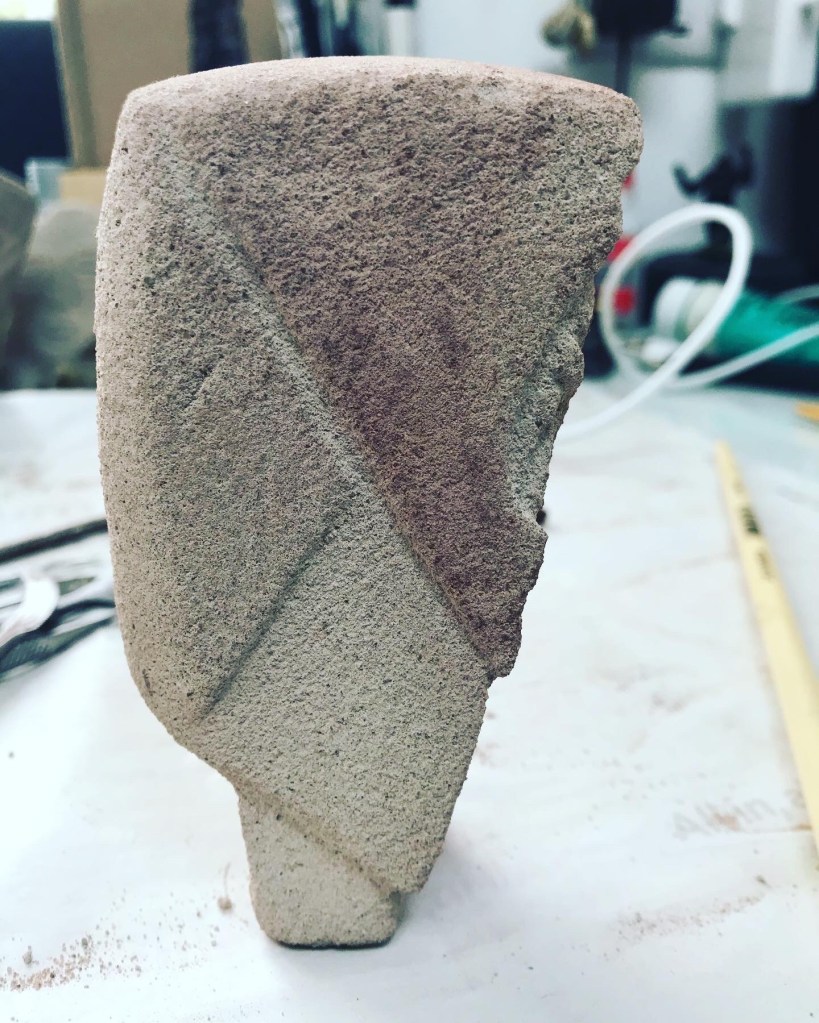
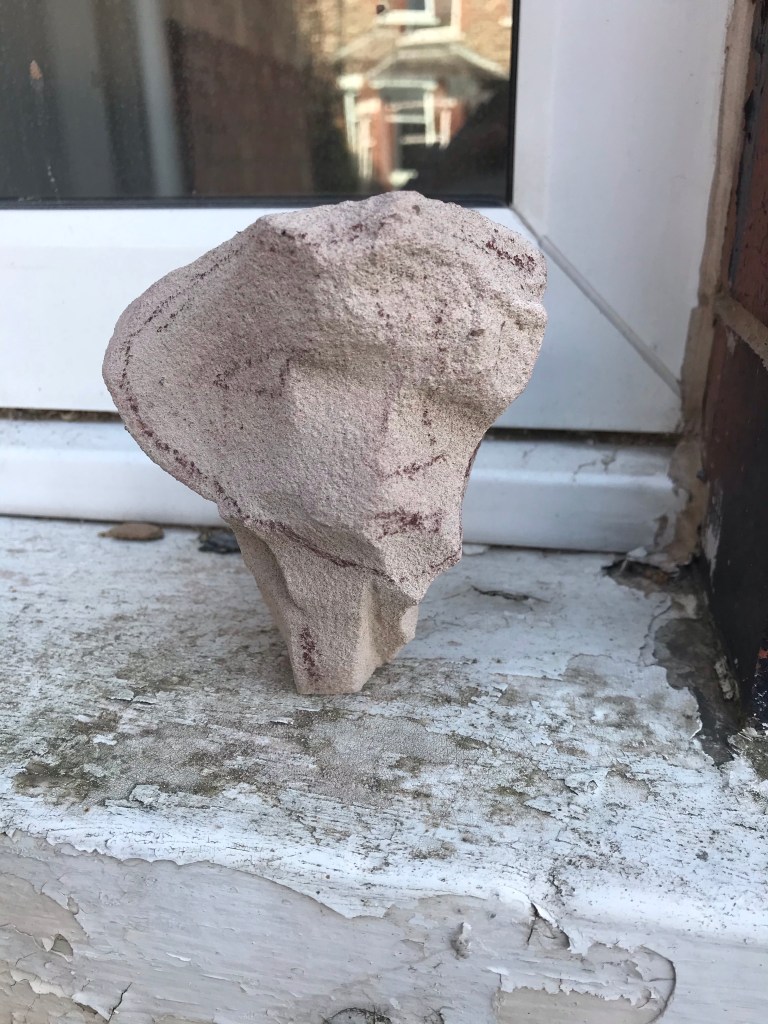
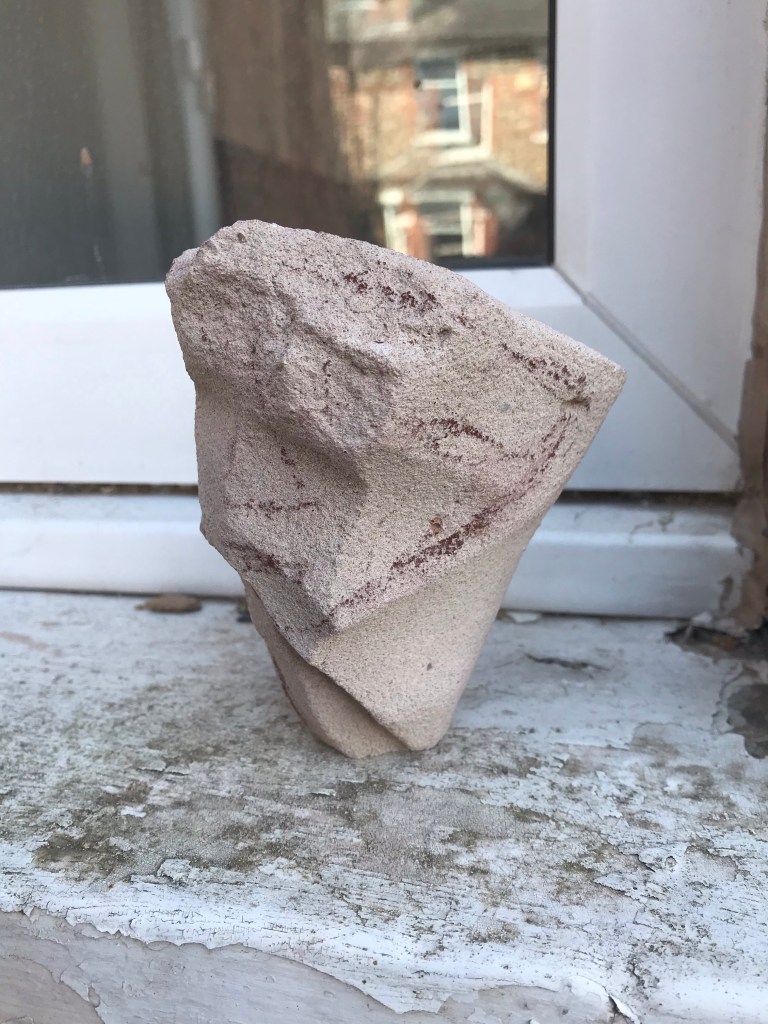
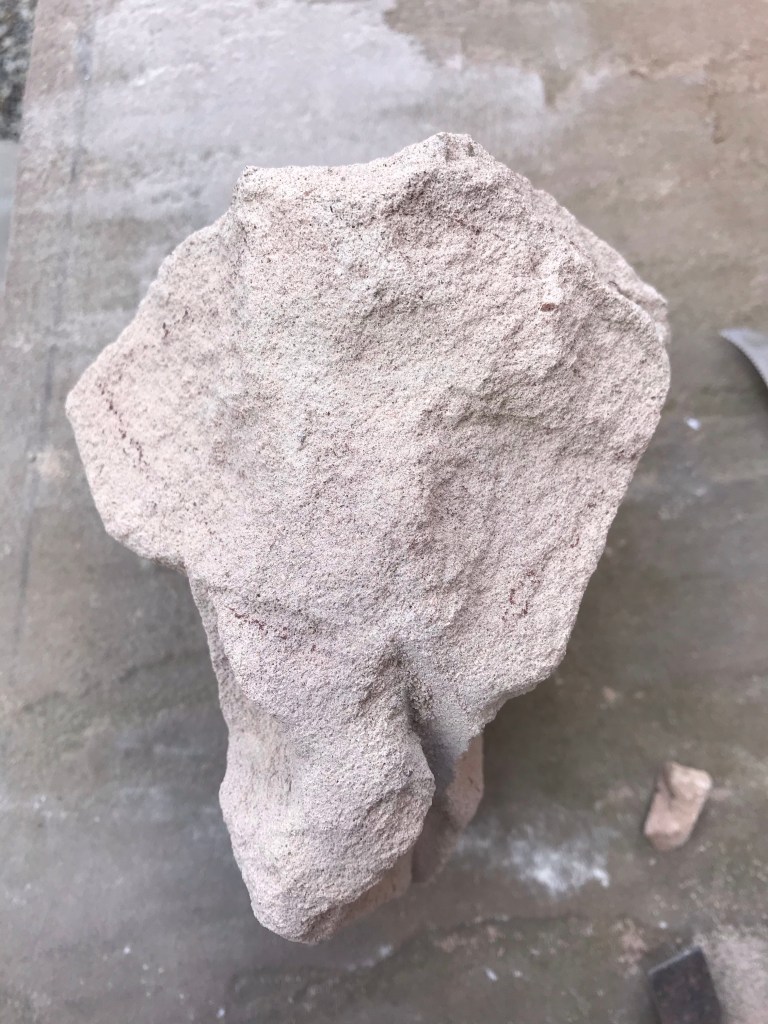
Today’s lump to go at, it could go either way a head a torso and head, let’s wait and see. . . . mortar #art #artistsoninstagram #carving #contemporarysculpture #sculpture #isolation #isolationcreation #isolationart
I expect research is all those things I do all the time, I’m always looking at books for inspiration, books about art art movements books about ethnography the thing is I’m so used to doing this but I don’t really reference it in a written form I’m sure you can see the subconscious influences in my art practice. anyway through my research and. the way I’m currently working I found myself taking an interest in. the working practice of Henry Moore.
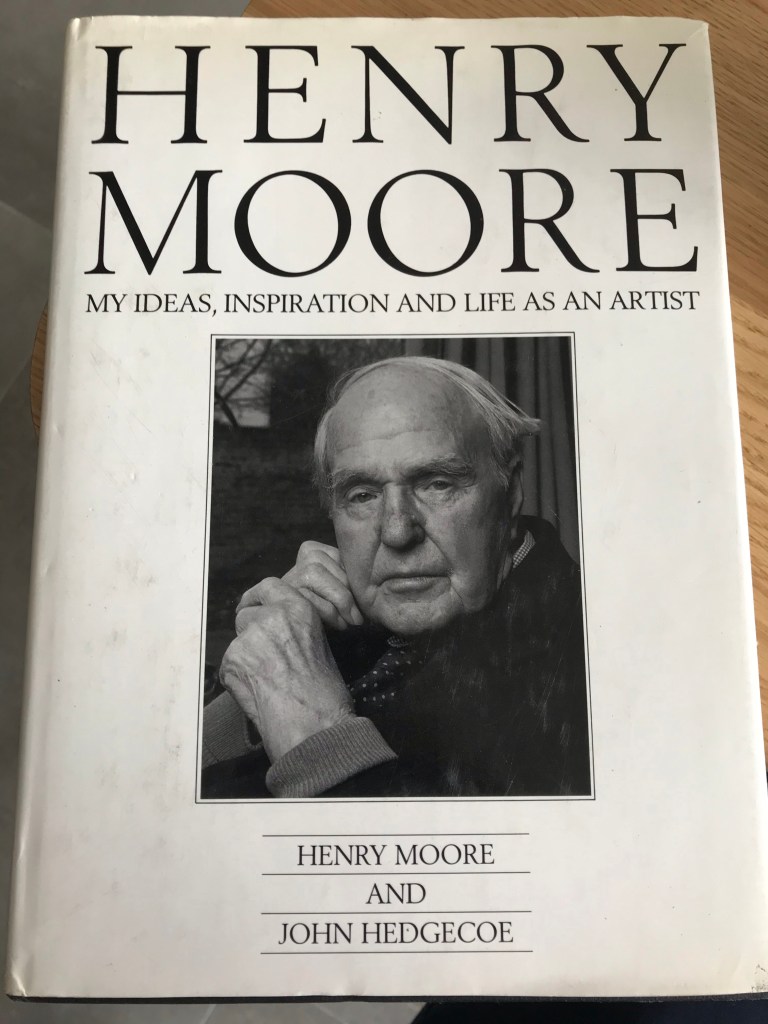
I have to be honest I have never really been that interested in the work of Henry Moore, maybe that’s because his work had become so much a part of the 20th century landscape, but strangely whilst carving out my mortar sculptures Hallie Moore has been in my mind, mainly because of a book I came across at a friends house many years ago. So. I tracked this book down to is called Henry Moore my ideas, inspiration and life as an artist written by Henry Moore with photos by John Hedgecoe.
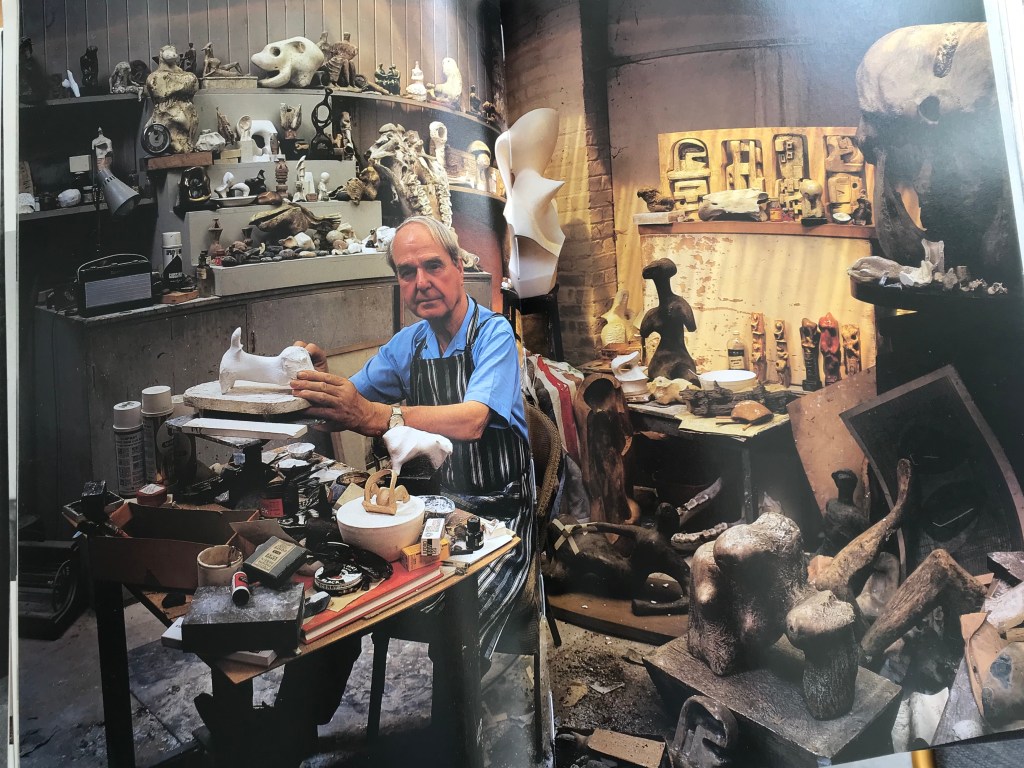
It is full of photos of the artist influences and photos of Moore at work in his cluttered studio What he writes is also very interesting and helps to inspire me.
This small section is rather insightful
“Epstein began to collect African sculptures and he encouraged me to study the primitive and Mexican sculpture at the British Museum, all of which influenced excited me. It was stone sculpture. I liked this active, physical side of sculpture and so began to know and enjoy stone sculpture is a very great excitement.”
I can relate to this as when I start carving out the mortar I get an excitement of what might be revealed from within.
I also liked this bit of writing by by Henry Moore and the nature of masks
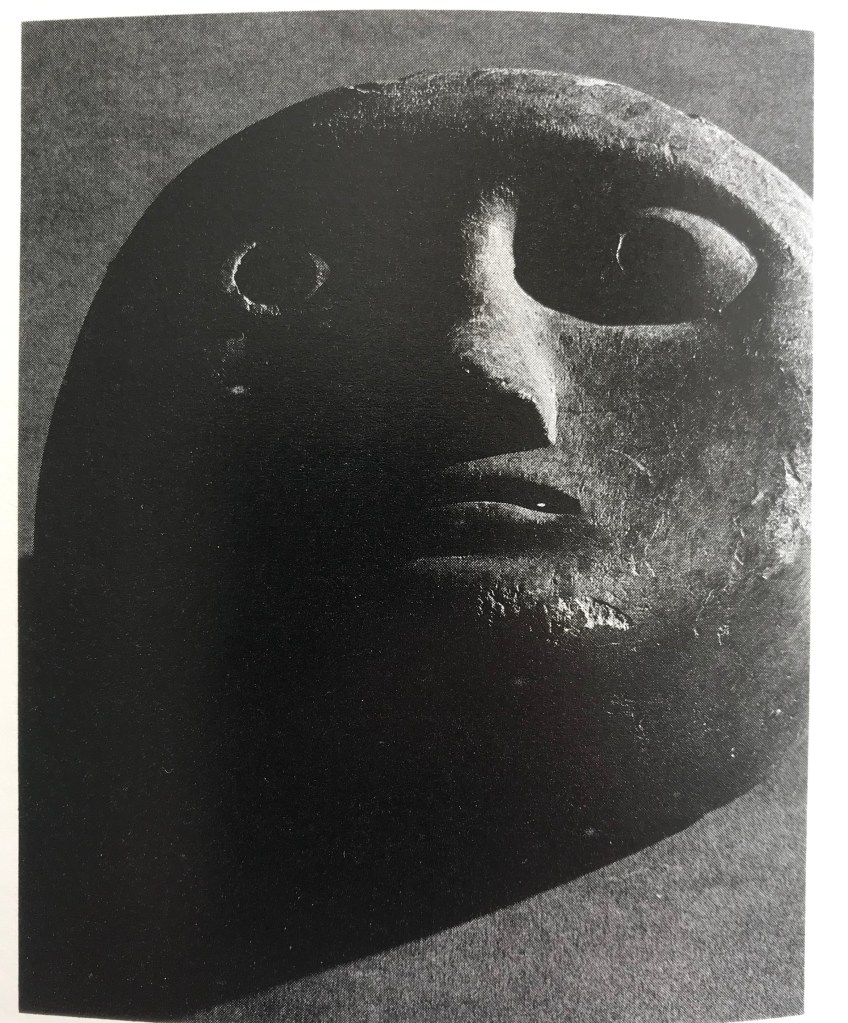
“Masks isolate the facial expression, enabling you to concentrate on the face alone. They have, of course, been used throughout history, particularly as theatrical devices. Although the back of the head can be as beautiful and as interesting to sculptor, it can’t be as expressive, in the ordinary sense of the word, as the face.”
He then goes on to talk about masks he has sculpted
“In this mask wants to give the eyes tremendous penetration and to make them stare, because it is the eyes which most easily express human emotion. In other masks, I used the asymmetrical principle in which one eye is quite different from the other, and the mouth is at an angle bringing back the balance. I had noticed this in some of the Mexican masks, and I began to find it in reality in all faces.
And as I began to find out that, in nature, living things, because of the effect of their environments, are never perfectly symmetrical, this principle became fundamental to my work. You will find in everyone’s face that one eye is different from the other, or the mouth is not quite horizontal, one nostril is a little higher than the other, the forehead comes out a little further on one side than the other.
And it is when you come to look at a person’s face with acute observation that you will find these many small variations that make all the difference between a really sensitive portrait and a dull one.”
This section made a lot of sense to me, for many years I’ve tried to gain a form of symmetry within my work but somehow always seemed to fail, in some ways Moore validates the lack of symmetry as this makes a piece of work more human and helps it to gain a spark of life, now when I am stressing out over head carving not looking symmetrical and will keep his words in mind.
I started scraping and hacking this friend back yesterday, and finally finished it around an hour ago. I am actually enjoying carving these, watching a lump of mortar slowly form itself in to something is pretty exciting. As for mistakes I am able to scrape them out. Mortar and chalk stain. . . . . . art #artist #artistsoninstagram #contemporaryart #contemporarysculpture #stonecarving #tribal #folkart #isolation #isolationcreation #isolationart
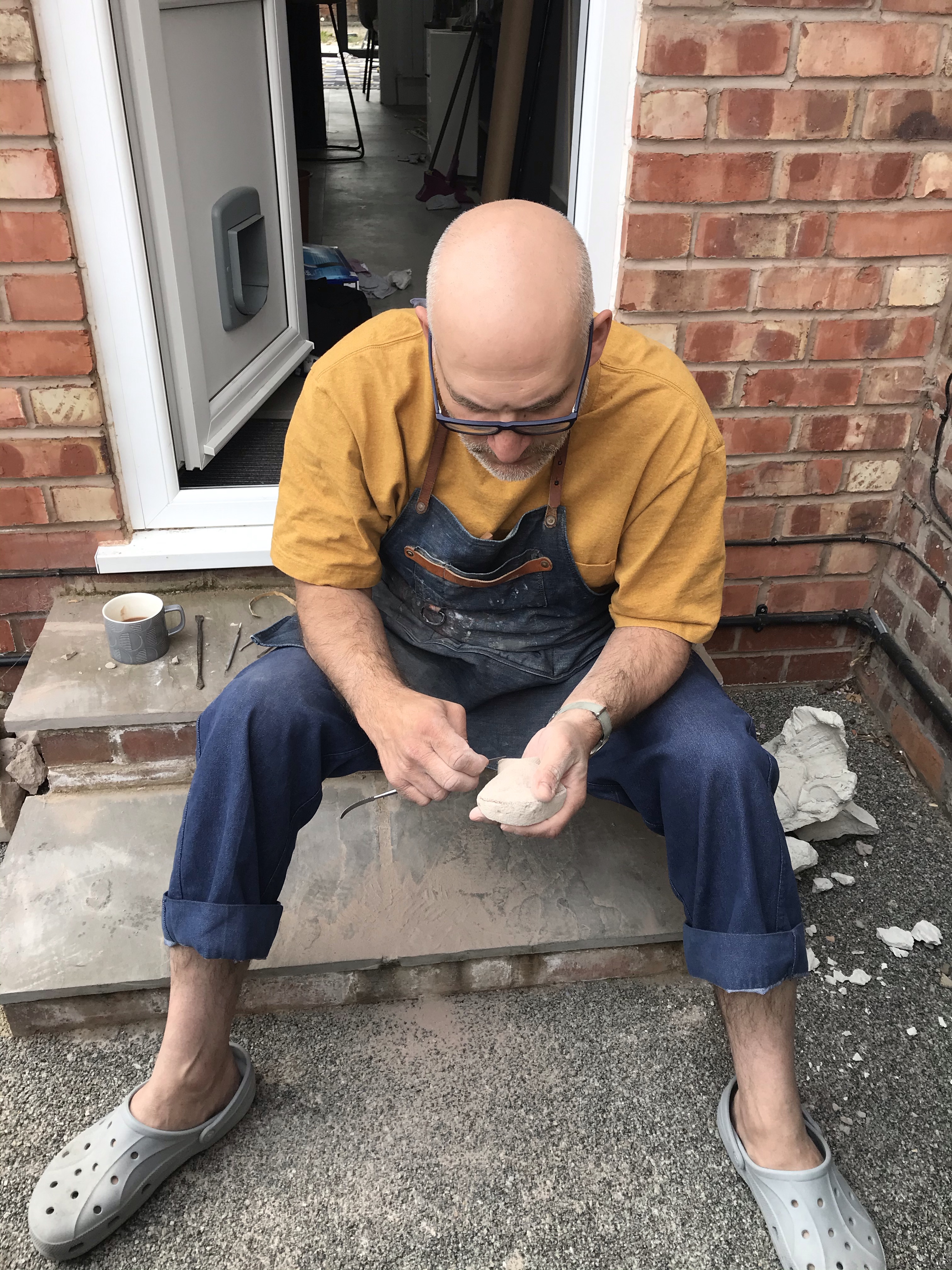
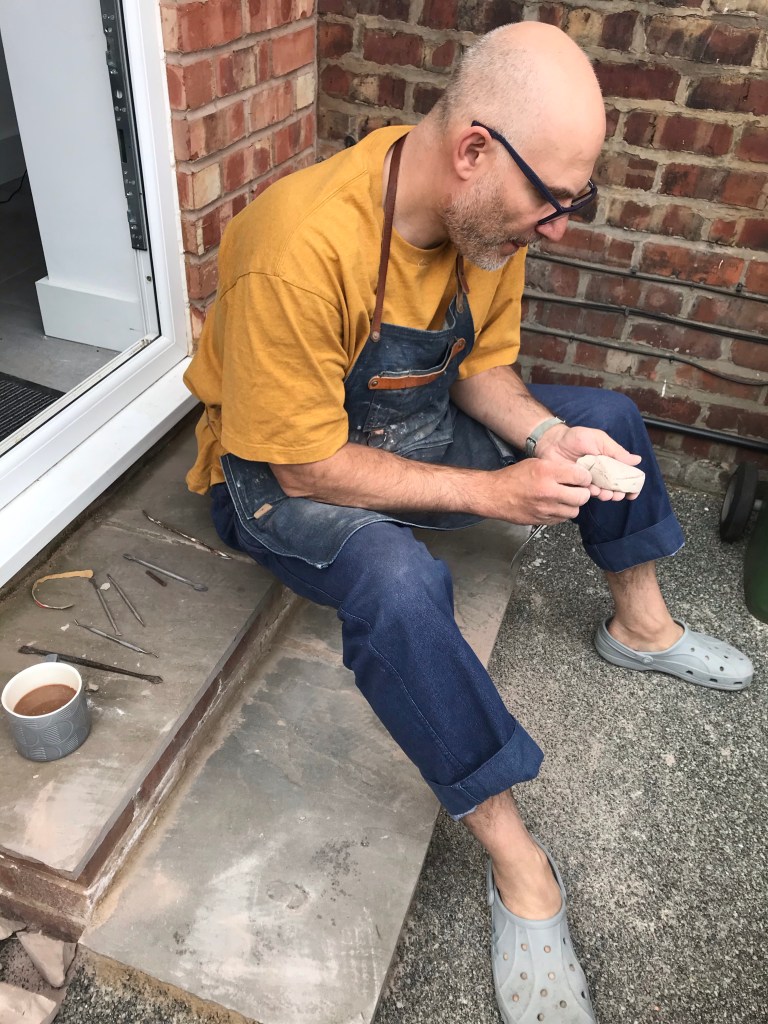
More shots of me at work on the back step, all captured by ace photographer Roo. And yes I’m wearing crocks the most comfortable house shoe. . . . art #artist #artistsoninstagram #carving #sculpting #forming #artistatwork #isolation #isolationcreation
Not knowing where to jump creatively and cogitating on many ideas, I decided to sit down and carve another mortar tribal head. . . . . art #artist #artistsoninstagram #contemporarysculpture #carving #stonecarving #tribal #folkart #ideas #inspiration #isolation #isolationcreation #creative #creativity #head
Whilst I was looking looking for inspiration and doing some research for my current art practice I kept stumbling upon these navigation stick charts from the Marshall Islands, I have been thinking about these for some time and how I could adapt and incorporate them in to my work practice.
I remember seeing some examples of these navigation charts in the Oceania exhibition held at the Royal Academy in 2018. I started. looking through the catalogue from this exhibition to see what it said about these charts.
There was not much information but what there was Kind of struck a chord this section especially
“They mastered, managed and acculturated the ocean, the water; made it semiotically legible as an extension of the sense of place. Marshall Islanders created weather charms to aid navigators at sea and made “stick charts” as teaching aids and mnemonic devices for remembering the patterns of sea currents and ocean swells in relation to the location of islands within an archipelago. Islanders maritime arts replete with images and narratives of natural and supernatural creatures, from frigate birds to crocodiles, whose powers are harnessed to the purposes. They populate the water creeks, rivers , estuaries, seas. and oceans with protective guardians and spirits”
I also like this section of the writing from the Oceania catalogue
“However the water is also a metaphor for an element of grief and loss. It is a graveyard of. voyagers who never returned, navigators lost away. It is the element that separated people from the homes or origins elsewhere, and a metaphor for the inevitable forgetting of who they were in the transformation becoming who they are as a new people in a new time and a new place.”
AdmittedlyI found this section of writing interesting the idea of grief and loss being related to the vastness of the ocean, especially having spent many years dealing with the grief and loss of my wife and trying to make some sense of it through my art practice.
So can I use or appropriate a version of the stick charts to map my own mythology? I have the materials dowel, raffia and hag stones to use within these pieces. I expect the only way I will find this out is to make a version of a stick chart.
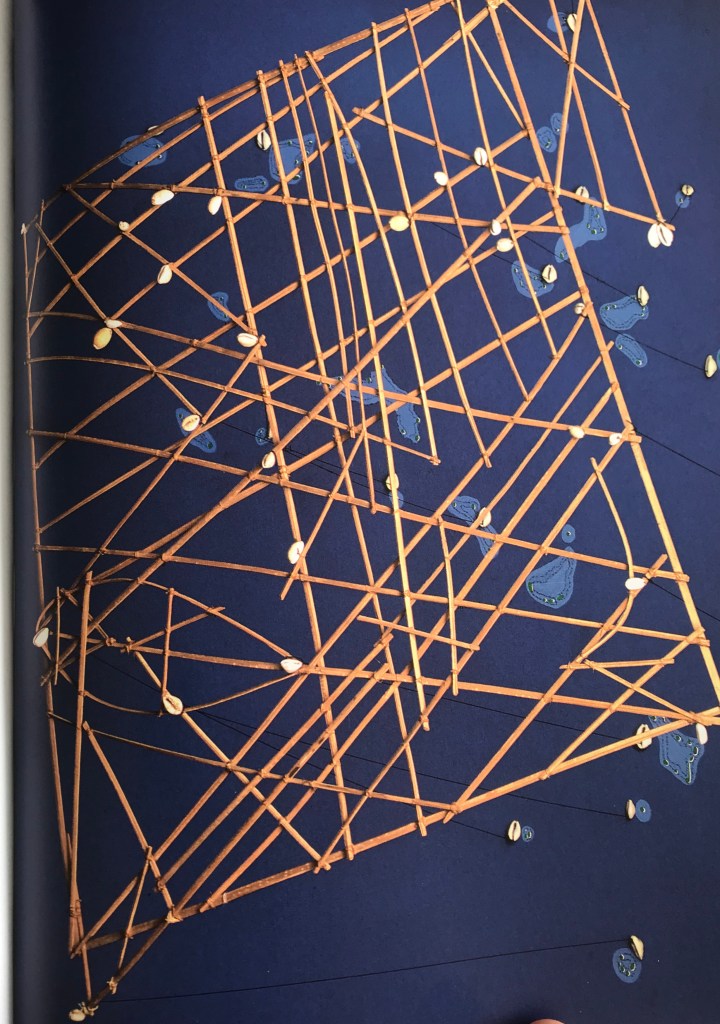
the stick chart in the photograph was made in the 19th century and comes from the Marshall Islands, is made of wood, fibre and snout shells and it is owned by the National Museum of Denmark.
Through researching a bit more on the Internet I came across this article on the subject of stick navigation
How Marshall Islanders navigated the sea using only sticks and shells, by Eric Grundhauser ,it is from Atlas Obscura.com and was written in October 2015
this section describes how the charts were used up navigate a you can have a safety
The stick charts of the Marshall Islands, in use since they were first inhabited in the 2nd century BCE, are simple-seeming navigational tools that look like little more than a bunch of twigs arranged into a loose lattice. They guide voyagers by depicting the waves and islands they are likely to encounter along the way. But unlike most maritime maps as we understand them today, the delicate stick charts were not brought on sea voyages. Instead, they were studied by the sailors prior to the trip. The directions and swells would be memorized by the mariners, who would then navigate without them.
there are three different types of stick charts Eric Grundhauser describes them below
The first type of chart was known as a “Mattang“. These charts were generally smaller and used mainly for instruction in the swell patterns of specific voyages, or in how to read a specific swell. These were often more abstract and symbolic, made by specific sailors for personal use, making them a bit more esoteric to the outsider. In these, as in all stick charts, the lines could be straight or curved or intersecting to represent the motion of the waves.
The second type of chart was the”Medo” chart which generally showed the relative position of a small number of islands to one another, and how their landmass’ swells presented and/or interacted. Unlike the mattang chart, the medo, was more concerned with the concrete position of islands, although again the oceanic swells were used to aid in navigation.
Finally the most far-reaching type of stick chart was the “Rebbelib“, which covered a much wider area, and a great many more islands. These charts, with their greater number of intersecting points often looked like a loose mesh of criss-crossing lines, dotted with shell markers. Some of these charts, which were not made to scale, could cover nearly the entirety of the Marshall Islands, which are spread over 750,000 square miles of the Pacific.
the charts are really beautiful pieces of functional folk art that are still in use.

 The Art and musings of Jeffrey Knopf